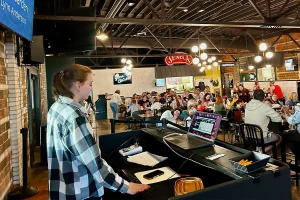
Think of bingo, and you might picture a dusty hall, paper cards, and a dabber in hand. That image is real, sure. But it’s just one frame in a much longer, and frankly, more fascinating film. The story of bingo is a story of quiet, relentless technical evolution. It’s a game that has shape-shifted from a simple paper-and-ink pastime into a digital powerhouse, all while keeping its soul intact. Let’s trace that journey.
The Humble Mechanics: Where It All Began
For decades, the technology of bingo was beautifully, analog-ly simple. The core components were physical and tactile. You had your paper cards, printed in specific patterns. You had your dabber or a humble bean. And you had the caller, with their cage or blower machine full of numbered balls. The randomness? Pure physics—the tumble of balls. The verification? Human eyes scanning rows.
This system had a certain magic. The rustle of paper, the smell of ink, the shout of “Bingo!” that cut through a hushed room. But it had limits. Speed, scale, and, let’s be honest, the potential for human error. Missed numbers, misheard calls—it happened. The game was ripe for an upgrade, even if no one in those halls could have guessed what was coming.
The First Digital Leap: The Electronic Bingo Machine (EBM)
Here’s where things started to get interesting. The first major tech shift didn’t happen online—it happened inside the bingo hall. Enter the Electronic Bingo Machine, or EBM. These were dedicated terminals, often rented by players, that displayed digital bingo cards.
Think of it as a bridge technology. The game was still played in a physical venue with a live caller. But now, a player could manage dozens, even hundreds of cards at once. The machine would automatically daub the numbers as they were called. This was a game-changer—literally. It removed the physical limitation of how many paper cards you could feasibly manage. It also eliminated dabber fatigue and human marking errors. The core social experience remained, but the mechanics got a silicon brain.
Why EBMs Mattered
They proved that players were ready for digital assistance. They showed that the essence of bingo—the anticipation, the community buzz—could survive a tech makeover. Honestly, they paved the mental road for what was next: taking the entire hall virtual.
The Internet Era: Breaking Down the Hall Walls
This was the big bang. With the rise of the internet and, crucially, secure online payment systems, bingo exploded into the digital realm. Online bingo platforms were born. Now, you didn’t need a hall at all. You needed a browser.
This shift solved huge pain points. Accessibility, for one. Players could now join a game from their sofa, at any hour. Variety, for another. With lower overhead, sites could offer countless rooms with different themes, ticket prices, and jackpots. The random number generator (RNG) replaced the blower machine—a complex algorithm ensuring fair, unpredictable draws, certified by independent auditors.
The Social Puzzle (And How They Solved It)
The biggest challenge wasn’t the game logic; it was replicating the chatter. Bingo is social. Well, online platforms ingeniously baked this in with live chat functions, moderated by friendly “hosts.” It created a new kind of digital hall banter. You know, the community feeling persisted, just through text bubbles and emojis instead of shouted conversations over tables.
The Mobile Revolution: Bingo in Your Pocket
If going online was the big bang, the rise of smartphones was the period of rapid expansion. Dedicated bingo apps turned the game into a true on-the-go experience. This wasn’t just a shrunken website; it was a native, streamlined experience designed for touchscreens and quick sessions.
Push notifications for game starts? Yes. One-touch daubing? Of course. Mobile payment integration? Absolutely. The game became seamlessly woven into daily life—a quick game on a commute, a few cards during a lunch break. The technology became invisible, putting the fun front and center.
Modern Tech Trends Shaping the Game Today
The evolution hasn’t stopped. Current bingo platforms are integrating tech trends we see everywhere else. It’s not just about playing bingo anymore; it’s about the user experience around bingo.
| Trend | Impact on Bingo |
| Gamification | Leveling up, completing missions, and earning badges for more than just winning. It turns play into a progressive journey. |
| Cross-Platform Play | Start a game on your laptop, continue on your phone. Seamless sync is now the expected standard. |
| Hybrid Experiences | Some venues now blend live events with online play, broadcasting callers to a global audience simultaneously. |
| Advanced RNG & Security | Transparency about fairness is key. Top sites now offer “provably fair” insights and bank-level encryption. |
And let’s not forget the buzzword of the decade: AI. While not calling numbers (yet), AI is used for personalized game recommendations, smarter chat moderation, and tailoring bonus offers to individual player habits.
What Was Gained, What Was Lost?
This tech journey isn’t just a list of upgrades. It’s a trade-off. The gains are massive: convenience, variety, and innovative new game formats that paper could never support. The loss, some argue, is in the raw, unmediated sensory experience. The tactile feel of the dabber, the collective gasp in a hall.
But here’s the thing—the technology didn’t erase the old world. It created a parallel one. Paper bingo halls still thrive, offering that classic experience. Digital platforms offer something different: a modern, versatile, and incredibly accessible version of the same core thrill. The spirit of the game—that heart-stopping moment before the final number—transcends the medium.
The Final Number: A Game in Perpetual Beta
So, from paper to pixels, the evolution of bingo tech is a masterclass in adaptation. It shows how a simple game can ride wave after wave of innovation without losing its identity. The technology became a bridge, not a barrier, connecting new generations to a classic pastime.
The story doesn’t end with apps. As we look ahead, who’s to say? Virtual reality bingo halls where you see avatars of fellow players? Even deeper social integrations? The game has proven it can adapt. The core loop—random numbers, marked cards, the hope for a pattern—is timeless. The wrapper around it? Well, that seems to be in perpetual, exciting beta. And that’s what keeps the game, after all these years, from ever being called… finished.